Coaxial BNC Feedthroughs and Components
The 'Bayonet Neill-Concelman' Connector, usually referred to as a BNC coaxial connection, is commonly used in conjunction with low noise 50-ohm instrumentation lines. Accu-Glass Products' coaxial BNC instrumentation feedthroughs are constructed with either floating shields or grounded shields.
Floating shields provide two concentric conductors: one outer metal tube or shield conductor concentric with, and enclosing, a cylindrical center conductor. Both electrical paths are electrically isolated from the vacuum flange.
Grounded shields provide only one electrical path that is electrically isolated from the vacuum flange. With grounded shields, the shield and vacuum flange are electrically common.
Ultrahigh (UHV) compatible coaxial cable assemblies are available to meet the needs of most in-vacuum, low noise instrumentation cable applications. The vacuum side of a grounded and floating BNC feedthrough consists of a 0.094 inch (2.4mm) diameter conductor pin that mates perfectly with Accu-Glass Products' grounded, or floating Accufast™ connector interface.
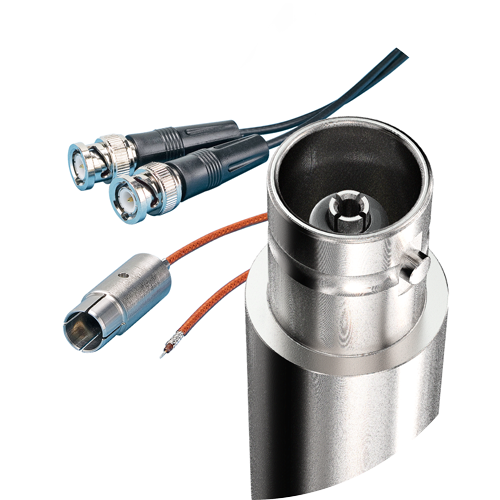
BNC Coaxial Interface
The 'Bayonet Neill-Concelman' connector, referred to as a BNC coaxial connection, is commonly used in conjunction with low noise 50-ohm instrumentation signal lines. BNC coaxial feedthroughs are constructed in both grounded and floating shield configurations. Floating shield types provide two concentric conductor paths: an outer metal conductor tube (shield) concentric with, and enclosing, a cylindrical center conductor pin. Both paths are electrically isolated from each other and a mounting flange. Grounded shield BNCs provide only one path that's electrically isolated from the flange, where grounded shield and flange are electrically common. Vacuum side of single-ended grounded and floating BNC feedthroughs have a 0.094 inch (2.4-mm) diameter conductor pin that mates with grounded or floating AccuFast™ connectors.
Features
- BNC Coaxial Interface
- Grounded and Floating Shield
- Single and Double Ended configurations
- Kapton® insulated 50-Ohm cable
- High temperature rated to 250°C
- UHV compatible construction
- Conflat® and ISO KF compatible mounts
- Air service cables / connectors
- Custom solutions on request
Specifications
| Electrical | |
| Voltage 1, Maximum | |
| Grounded Shield | 500 VDC |
| Floating Shield | 2,500 VDC |
| Current, Max @ 20°C | 3 A |
| Material | |
| Shell | 304 Ss |
| Pin / Conductor | 304 Ss |
| Insulation, Ceramic | Alumina |
| Connector, Vacuum 2 | |
| AccuFast™ | PEEK / Ss |
| BNC | PEEK / Brass |
| SMA | PEEK / Brass |
| User-End | PEEK / BeCu |
| Connector, Air | Composite |
| Cable Insulation | Kapton® |
| Vacuum Range | |
| UHV, Ultrahigh vacuum | 1x10E-10 Torr |
| HV, High vacuum | 1x10E-8 Torr |
| Temperature Range | |
| Feedthrough | -200 to 250°C |
| Flange, Conflat® | 450°C |
| Flange, ISO | 150°C |
| Connector / Cable, Air | 165°C |
| Connector / Cable, UHV PEEK | 250°C |
| Thermal Gradient, Maximum | 25°C/minute |
| Notes |
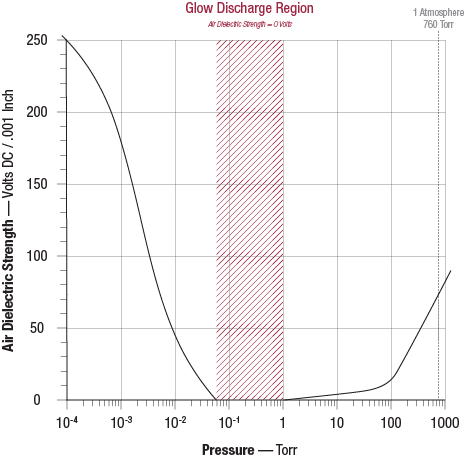
- Electrical ratings are maximum test values, with feedthrough's vacuum side at ≤ 1x10E-4 Torr. Feedthroughs are intended for instrumentation applications carrying low level signal voltage and current.
- PEEK is a polyether ether ketone thermoplastic.
- Overall assembly ratings must be adjusted to that of its lowest rated component. For cryogenic service, the lowest recommended temperature is -200°C
- Connectors and cables are not included with feedthrough and must be purchased separately.